
Blog
How to Prevent Skin Irritation While Wearing Adult Diapers

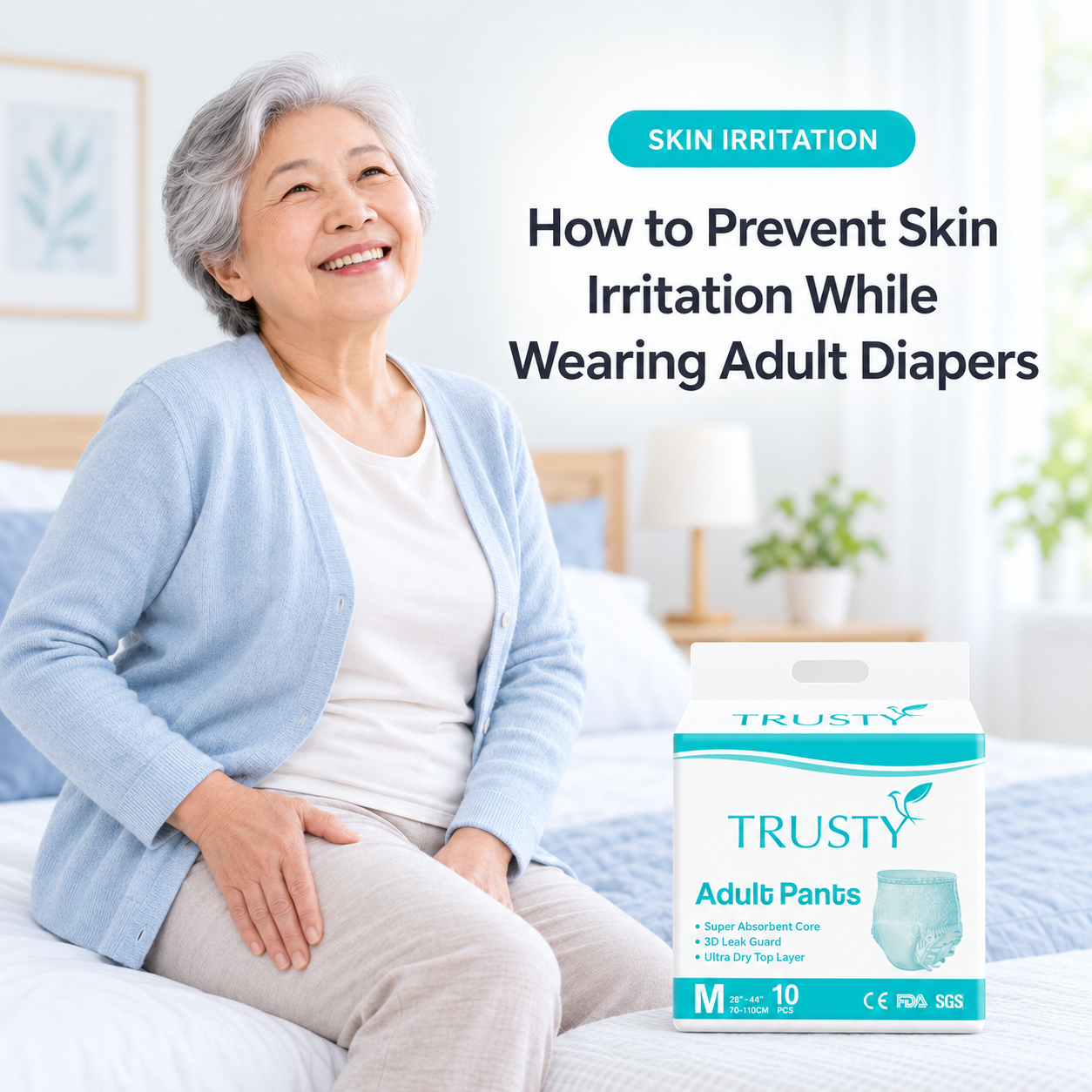
Skin irritation from adult diapers can often be prevented by keeping the skin clean and dry, changing diapers promptly, choosing the right fit and absorbency, and using skin-friendly materials. Regular skin checks can also help identify redness or irritation early.
Key takeaways
- Understand the causes: Learn how moisture, friction, poor fit, materials, heat and humidity can contribute to skin irritation
- Choose the right protection: Find the appropriate material, fit, absorbency and diaper style for the wearer’s needs
- Follow a consistent routine: Check, clean, dry and protect the skin regularly to help prevent irritation
- Know when to seek help: Recognize persistent or worsening irritation and know when medical advice may be needed
Noticing redness? Suffering from itching? Experiencing a warm, tender patch of skin? These are common complaints after a diaper change. And people often think that these symptoms automatically come with wearing incontinence products. But it does not have to!
Skin irritation while wearing adult diapers usually comes down to three things: how long the skin stays in contact with moisture, how well the product fits, and what materials touch the skin directly. This indicates that getting these right and ensuring that there is a consistent change routine is going to keep discomfort at bay.
This guide walks through why the irritation happens and what actually helps prevent it.
📝 Quick Tip: Do not wait for the wearer to complain of discomfort before checking the skin. Regular visual checks can help you spot early redness or irritation before it becomes more difficult to manage.
Why Skin Reacts Badly to Prolonged Diaper Wear
Skin that stays damp for too long starts to soften and weaken, resulting in overhydration of the skin barrier. On this compromised barrier, both urine and stool affect the skin’s natural pH and irritate it far more easily. On top of that, friction from movement and an imperfect fit add mechanical stress.
This combination is clinically known as incontinence-associated dermatitis and is more common than people realize. A 2025 critical review found that reported prevalence among older adults varies considerably by setting and diagnostic criteria, ranging from 3% to 30%. What is commonly referred to as adult diaper rash can therefore involve more than simple redness, particularly when moisture and friction continue for prolonged periods.
Does Singapore’s Climate Make This Worse?
Yes. Heat and humidity are not just uncomfortable but act as a real factor in skin breakdown.
Singapore’s annual average relative humidity sits at around 82%, with relative humidity frequently reaching 100% during prolonged periods of rain. Imagine this humidity getting combined with body heat trapped under a diaper! This creates exactly the kind of warm, moist environment that leads to the worst kind of skin irritation.
Given how Singapore’s population is aging, this is a growing concern. According to the Ministry of Health’s 2026 Age Well SG mandate, the country reached ‘super-aged’ status in 2026, with more than 21% of residents now aged 65 and above. As skin ages, it tends to become thinner, drier and more vulnerable to friction and irritation, while healing can also take longer.
⚠️ Caution: Singapore’s humidity is not a reason to reduce fluid intake to try to control leakage. Dehydration can create its own health risks. Any changes to fluid intake should be discussed with a healthcare professional, particularly for older adults or people with existing health conditions.
What Causes Urinary Incontinence
Skin irritation prevention begins with a detailed understanding of why incontinence is happening at all. It is highly prevalent locally; data from SingHealth indicates that about 15% of women in Singapore suffer from stress urinary incontinence alone, often altering their lifestyles and suffering in silence due to embarrassment. The underlying cause can affect how often changes are needed.
Common urinary incontinence causes include:
- Age-related weakening of bladder muscles
- Enlarged prostate in men, resulting in dribbling or urgency
- Urinary tract infections
- Certain medications, including diuretics
- Reduced mobility that delays reaching the toilet on time
- Nerve conditions or cognitive decline affecting bladder signals
Some causes of urinary incontinence are temporary, such as a urinary tract infection or certain medicines, while others are associated with longer-term health or mobility issues. Identifying the underlying cause can therefore be important rather than simply assuming that leakage is a normal part of aging.
Understanding the specific urinary incontinence causes can also help determine how often changes may be needed and what type of protection is most appropriate.
🩺 Worth Knowing: Urinary incontinence is not an inevitable part of getting older. It can have several different causes, and some are treatable. If leakage is new or has suddenly become worse, it is worth discussing the change with a healthcare professional.
Why Material Choice Matters
The materials used in the incontinence products make a real difference to irritation risk.
Look out for:
- Fragrance-free and lotion-free construction, since added scents and lotions are common irritants
- Chlorine- and dioxin-free processing
- Breathable outer layers that reduce trapped heat
- Soft, hypoallergenic inner materials, particularly for anyone with sensitive skin
TrustyCare’s diaper range is made without chlorine, dioxin, fragrance, lotion, latex, or phthalates, and uses a combination of pulp and SAP with a patented Groove Diversion Layer designed to distribute liquid and improve absorption.
⚠️ Caution: “Hypoallergenic” does not mean that a product can never cause a reaction. If irritation repeatedly appears after switching to a particular product, stop using it and speak with a healthcare professional if the reaction persists or worsens.
Choosing the Right Fit for Adult Pull-Up Diapers
Fit affects irritation just as much as material does.
Too tight adult pull-up diapers? They are going to dig into the skin and trap heat! On the other hand, too loose diapers will allow leakage, which means more contact with moisture and more frequent friction from adjustment.
So, how to get the fit right? Measure the waist and hips and check against our size chart. Choose from M, L, and XL to match different body types. Remember, you are looking for a snug but not tight fit; this is going to protect the skin.
Signs the Fit May Need Changing
- Persistent red marks around the waist or legs
- Gaps around the leg openings
- Repeated leakage despite changing the product regularly
- The diaper shifting noticeably during movement
- Difficulty putting on or removing a pull-up
📝 Caregiver Tip: Check the fit while the wearer is standing or sitting as well as when they are lying down, where practical. A diaper that appears secure in one position may shift or create gaps when the wearer moves.
Choosing the Right Absorbency
Absorbency should match the wearer’s needs, particularly for overnight use. If leakage continues despite choosing the correct size of the adult pull-up diaper, consider whether a higher absorbency level may be more suitable.
Check:
- How frequently leakage occurs
- Whether the product is used during the day or overnight
- Whether leakage happens before the usual change time
What Actually Helps: Cause, Effect, and Prevention
There are several factors that can contribute to skin irritation, and they do not all need the same solution. The table below brings the main prevention points together in one place.
| Potential Cause | Why It Irritates Skin | How to Prevent It |
| Prolonged moisture | Softens and weakens the skin barrier | Check regularly and change promptly |
| Poor fit – too tight or too loose | Tight products can cause friction, while loose products can allow leakage | Measure properly and choose the correct size |
| Fragranced or lotioned products | Added ingredients may irritate sensitive skin | Choose fragrance-free, lotion-free materials |
| Inadequate cleansing | Residue can remain on the skin and contribute to irritation | Clean gently and dry the skin thoroughly |
| Trapped heat and humidity | A warm, moist environment can make irritation more difficult to manage | Choose breathable materials and allow brief air exposure during changes where practical |
Table 1: Common Causes of Adult Diaper Skin Irritation and Prevention Tips
A Simple Daily Routine to Protect the Skin
✅Check regularly, rather than waiting for discomfort to signal a change is overdue
✅Change the diaper promptly when needed
✅Clean gently with a suitable cleanser or plain water
✅Pat the skin dry completely before putting on a fresh diaper
✅Apply a thin barrier cream or skin protectant where appropriate
✅Give the skin a few minutes of air exposure during changes when possible
✅Choose a size and absorbency level suited to actual needs, not guesswork
✅Check the skin regularly for redness, soreness, or broken skin
When Should You Seek Medical Advice?
Not every red or sore patch is caused by an adult diaper. While mild adult diaper rash may improve with better skin care and product changes, seek medical advice if irritation persists or worsens; don’t simply keep changing products.
Speak with a healthcare professional if:
- Redness does not improve
- The skin becomes broken, raw or painful
- There is swelling, discharge or suspected infection
- The rash keeps returning despite changes to the care routine
Skin Protection Checklist
Before finishing each change, a quick check can help keep the routine consistent:
- Has the used diaper been changed promptly?
- Is the skin clean and completely dry?
- Is there any new redness, soreness, or broken skin?
- Does the new diaper fit comfortably without digging into the skin?
- Is the product suitable for the wearer’s sensitivity and needs?
- Is the absorbency appropriate for the amount of leakage?
- Is there anything that needs to be changed if irritation keeps returning?
Note: The aim is not to make every change complicated. A repeatable routine that covers checking, cleaning, drying, fitting, and monitoring the skin is easier to maintain over time.
Final Thoughts
Adult diaper rash is rarely about the diaper alone. It is usually the combination of moisture, friction, fit, and material that decides whether skin stays healthy or becomes irritated. In Singapore’s humid climate, that combination needs a bit more attention than it might elsewhere, particularly for older skin that takes longer to recover.
A steady routine, the right size, and materials free from common irritants go a long way toward keeping skin comfortable, whether you are caring for yourself or a loved one.
Looking for Skin-Friendly Adult Diapers?
TrustyCare’s pull-up and tape-style ranges are made with hypoallergenic, fragrance-free materials and come in a range of sizes to help reduce the risk of irritation.
Browse the range to find the right format, fit and absorbency for your needs, or reach out to the team if you are unsure which option suits your situation.
Frequently Asked Questions (FAQs)
1. Can Wet Wipes Irritate Skin when Changing Adult Diapers?
Yes. Some wipes contain fragrances, alcohol or other ingredients that may irritate sensitive skin. Choose gentle, skin-friendly wipes or plain water where appropriate.
2. Should a Barrier Cream Be Used Every Time an Adult Diaper Is Changed?
A barrier product may be appropriate for people at higher risk of irritation, but it should be applied as directed and in a thin layer. If irritation persists, seek professional advice.
3. How Can Caregivers Protect Fragile Skin During Diaper Changes?
Handle the skin gently, avoid vigorous rubbing, cleanse carefully, and make sure the area is completely dry before putting on a fresh diaper.
4. Can Sitting for Long Periods in an Adult Diaper Increase Skin Irritation?
Yes. Prolonged sitting can increase heat, moisture, and friction, particularly around areas where the diaper presses against the skin.
5. Can Bed Underpads Help Prevent Skin Irritation from Overnight Leakage?
Bed underpads can help manage overnight leakage by protecting bedding from moisture. They should be used alongside appropriate incontinence products and regular changes rather than as a replacement for them.